Guide for Storz-Forged Coupling and Instantaneous Couplings
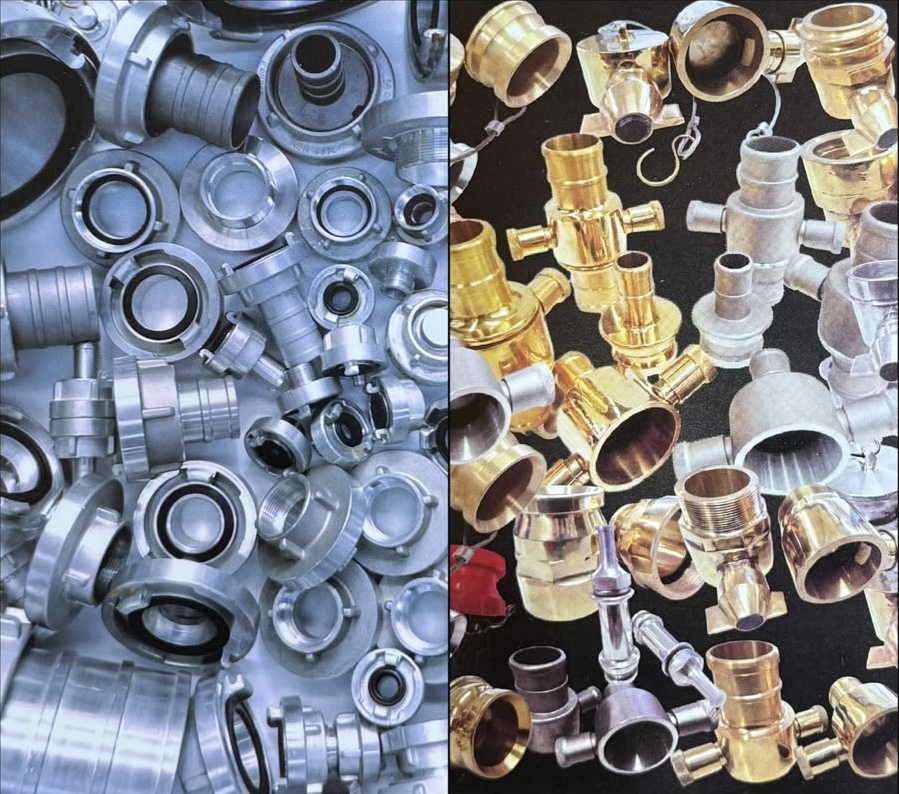
Storz Forged and instantaneous couplings are the two most common connection types on Australian fire systems. This guide explains how each works, how they differ, and which fitting suits your hydrant, booster, or fire hose reel under AS 2419.4.
What Is a Storz Forged Coupling?
A Storz Forged coupling is a symmetrical, "sexless" fitting with no separate male or female end. Two identical heads press together and twist a quarter-turn to lock, using interlocking hooks and a gasket-sealed flange. Because every coupling of the same size is interchangeable, there's no risk of mismatched threads during an emergency, a major reason fire services favour it.
In Australia, Storz couplings are increasingly the standard. Under AS 2419.4, newly installed or modified fire hydrant and booster systems should use forged Storz hose connections, and Fire and Rescue NSW (FRNSW) now specifies a 65 mm Storz hermaphrodite connection for compatibility with brigade equipment. Storz fittings are also rated for high pressure (up to 16 bar) and resist corrosion well when made from brass, aluminium, or stainless steel.
What Is an Instantaneous Coupling?
The British instantaneous coupling (sometimes called the John Morris coupling) is a gendered fitting; one male, one female end, designed for fast connection and release via a spring-loaded claw or lever mechanism. It has long been the traditional fitting in Australian and British fire hose reels, hydrants, and pump connections, particularly on older systems installed before Storz became the preferred standard.
Instantaneous couplings connect quickly under pressure and are simple for firefighters to operate one-handed, but because they're gendered, mismatched threads or coupling types between brigades or buildings can occasionally cause compatibility issues.
Key Differences at a Glance
| Feature | Storz Forged Coupling | Instantaneous Coupling |
|---|---|---|
| Connection type | Symmetrical (no male/female) | Gendered (male/female) |
| Locking method | Quarter-turn interlock | Spring claw/lever |
| Compatibility risk | Low — any same-size Storz fits | Possible thread/type mismatch |
| Current AS standard | AS 2419.4 | Legacy/pre-2008 systems |
| Common use | Hydrants, booster inlets, FDCs | Hose reels, older hydrant systems |
Which One Does Your Fire System Need?
New or upgraded systems: AS 2419.4 and most current fire brigade guidelines point toward Storz couplings for hydrant valves and booster connections.
Existing pre-2008 installations: These may still run on FBT or instantaneous-style outlets and don't need upgrading unless the system undergoes broader modification.
Fire hose reels: Instantaneous couplings remain common and compliant for hose reel applications.
Multi-site or older buildings: A site audit is worthwhile to confirm whether adaptors are needed to bridge legacy instantaneous fittings with newer Storz-compliant equipment.
Get the Right Fitting, Every Time
Papillon Australia supplies brass, aluminium, and stainless steel Storz and instantaneous couplings, adaptors, and hydrant fittings compliant with Australian Standards. If you're unsure which coupling your building or system requires, our team can help you check compliance against AS 2419.4 and current state fire brigade requirements before your next inspection.
Author: Papillon Australia
Posted Time: 2026-07-29
Comments: 0
Labels: storz couplingsstorz forged couplinginstantaneous couplingAS 2419.4fire hose fittingsFRNSWfire hydrant couplingsfire hose reel fittingshydrant adaptorsfire protection equipment
Location: Australia