Mandatory Safety Signs Required in Australian Workplaces
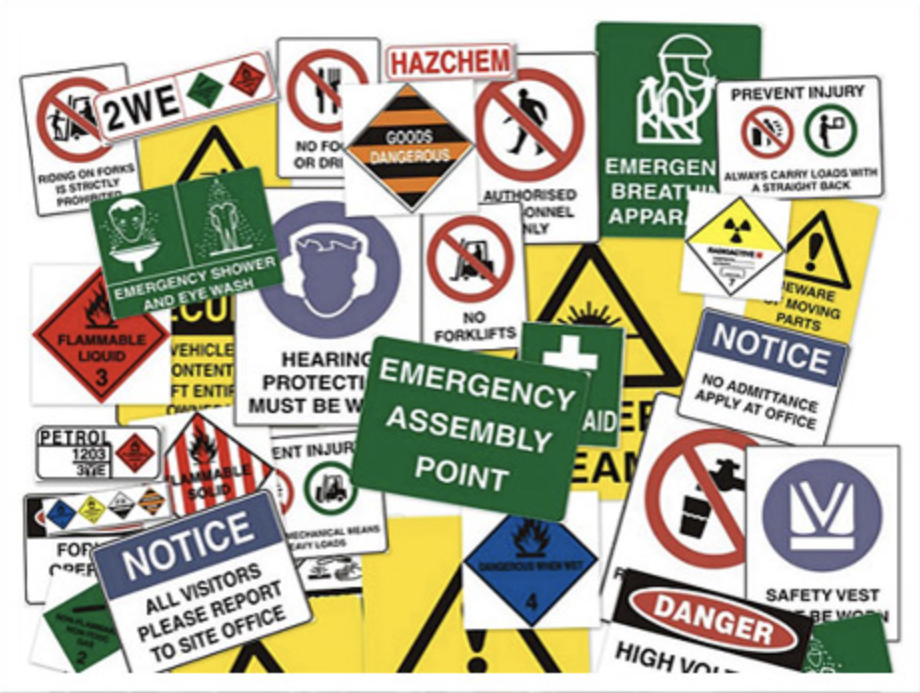
Safety signage is a legal requirement under Australian workplace health and safety legislation. Learn which mandatory, warning, prohibition, emergency and fire safety signs are required for compliance.
Workplace safety signage plays a critical role in protecting workers, visitors and the public. In Australia, safety signs are not optional — they are a legal requirement under workplace health and safety legislation and relevant Australian Standards.
Understanding which safety signs are mandatory in Australian workplaces helps businesses maintain compliance, reduce risk and improve on-site safety.
Australian Standards Governing Safety Signs
Mandatory safety signage in Australia is primarily governed by:
• AS 1319 – Safety Signs for the Occupational Environment
• Work Health and Safety (WHS) Regulations
• State-based WHS authorities including Safe Work Australia and WorkSafe Victoria.
AS 1319 sets out the design, colour, shape and placement requirements for safety signs used in workplaces across Australia.
Types of Mandatory Safety Signs in Australia
1. Mandatory Signs (Blue & White)
Mandatory signs indicate actions that must be carried out to comply with safety requirements.
Common examples include:
• Eye protection must be worn
• Hearing protection must be worn
• Hard hat area
• Safety footwear required
These signs are required where personal protective equipment (PPE) is necessary to control workplace hazards.
2. Warning Signs (Yellow & Black)
Warning signs alert people to potential hazards or dangerous conditions.
Examples include:
• Warning: Flammable materials
• High voltage
• Forklift traffic
• Slippery surface
These signs must be displayed in areas where hazards cannot be completely eliminated.
3. Prohibition Signs (Red, White & Black)
Prohibition signs indicate actions that are not permitted in the workplace.
Examples include:
• No smoking
• No unauthorised entry
• No naked flames
These signs are mandatory where restricted behaviour could increase risk or cause injury.
4. Emergency Information Signs (Green & White)
Emergency signs provide critical information during emergencies and must be clearly visible at all times.
Common emergency signs include:
• Emergency exits
• First aid
• Emergency assembly points
• Emergency eyewash or shower locations
These signs are essential for safe evacuation and emergency response.
5. Fire Safety Signs (Red & White)
Fire safety signs identify the location of fire protection equipment.
Examples include:
• Fire extinguisher
• Fire hose reel
• Fire hydrant
• Fire blanket
Fire safety signage is mandatory wherever fire-fighting equipment is installed and must remain unobstructed.
Where Must Safety Signs Be Installed?
Safety signs must be installed:
• At points of entry to hazardous areas
• Near specific hazards or equipment
• Along evacuation routes
• At fire protection equipment locations
Signs must be clearly visible, durable and maintained so they remain legible at all times.
Choosing the Right Safety Signs
When selecting safety signs, Australian workplaces should ensure:
• Compliance with AS 1319
• Appropriate materials for indoor or outdoor use
• Clear pictograms and legible text
• Placement at eye level where practical
Using compliant safety signs helps businesses meet legal obligations and demonstrates a commitment to workplace safety.
Conclusion
Mandatory safety signage is a critical part of workplace safety compliance in Australia. By understanding and installing the correct mandatory, warning, prohibition, emergency and fire safety signs, businesses can create safer work environments and meet regulatory requirements.
Author: Papillon Australia
Posted Time: 2024-01-15
Comments: 0
Labels: AS 1319australian safety signsmandatory safety signsworkplace safety australiafire safety signagewhs regulationssafety compliance
Location: Australia