What Is a Fire Hydrant Booster Cabinet? Australian Requirements Explained
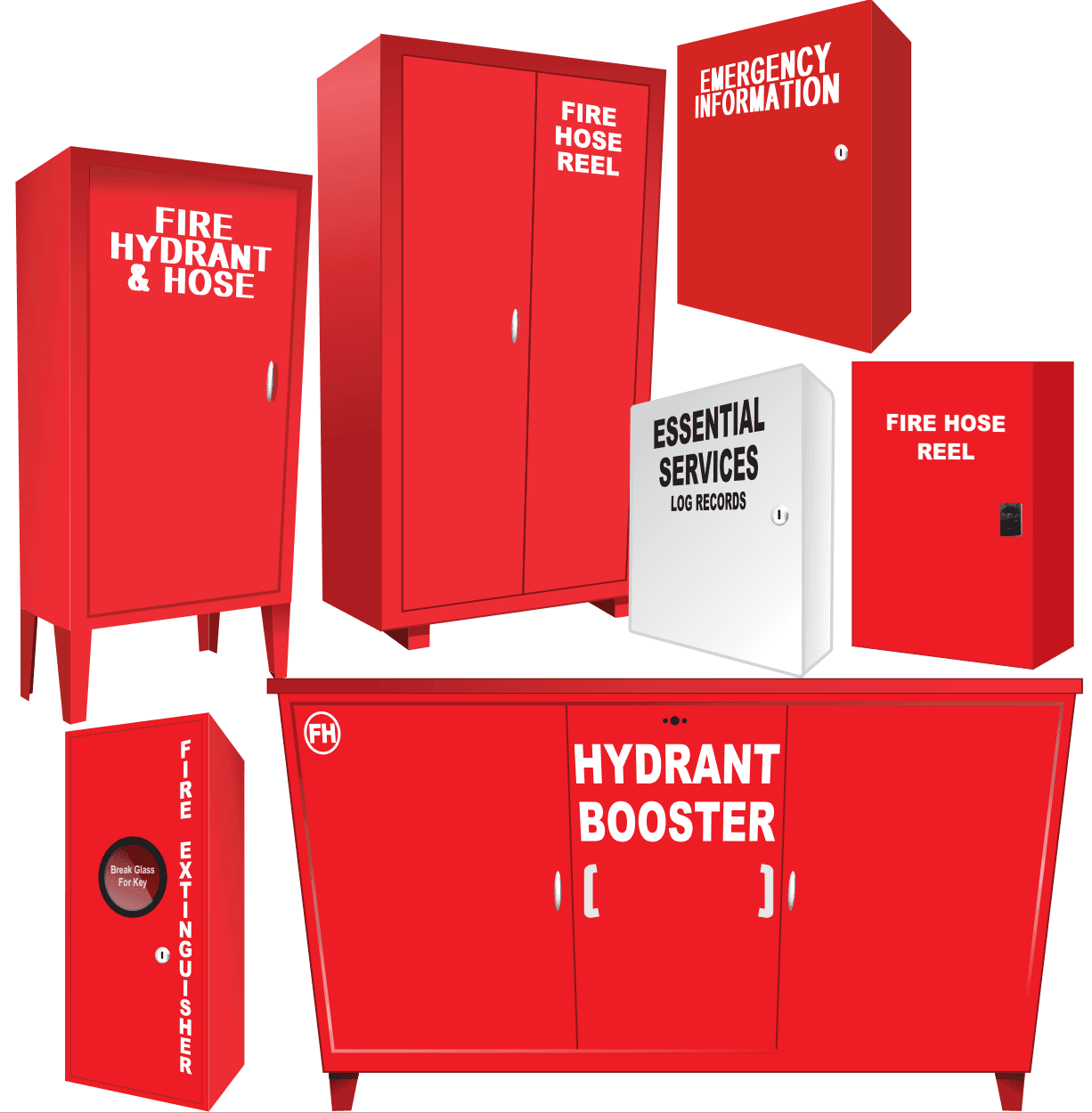
A fire hydrant booster cabinet houses the inlet connection that lets fire brigades pump additional water into a building's hydrant or sprinkler system during a fire. It's one of the first things firefighters look for on arrival, and getting its design, placement, and signage wrong can mean a failed inspection or, worse, a delay during a real emergency.
What Does a Booster Cabinet Do?
The booster assembly inside the cabinet connects fire brigade pumper trucks to a building's internal fire hydrant or sprinkler system, boosting water pressure beyond what the town main alone can supply. The cabinet protects the booster inlets, non-return valves, and Storz connections from weather, tampering, and physical damage while keeping them clearly visible and accessible.
When Is a Booster Required?
Under AS 2419.1:2021, a booster assembly is now required whenever more than two feed hydrants are needed to achieve adequate site coverage, a stricter threshold than the previous edition's "more than six hydrants" rule. This means more buildings now require a compliant booster and cabinet than under earlier standards.
Key Australian Requirements
Location: The booster should generally sit within 20 metres of the main pedestrian entrance or at the vehicle access point on the property boundary, positioned so it's easily identifiable and accessible to fire brigade tenders.
Standard compliance: Installation must follow AS 2419.1 and be integrated with the National Construction Code (NCC) fire-fighting equipment provisions.
Fittings: Storz adaptors on the booster must be forged, isolation valves are required under the booster, and a minimum 100 mm clearance must be kept around all handwheels.
Signage: Cabinet doors typically require clear lettering (state fire authorities specify minimum letter heights) identifying the booster inlet, plus a block plan showing hydrant locations within the required distance.
Protection: Where a booster sits close to a building, a fire-rated freestanding wall may be required for protection, per AS 2419.1 Section 7.
Choosing the Right Cabinet
Booster cabinets come in several configurations depending on your site's hydrant layout and coverage needs:
• Single booster cabinets — for smaller sites with straightforward hydrant coverage
• Dual booster and FH cabinets — combining booster inlets with fire hose reel access
• Quad booster and FH cabinets — for larger sites needing multiple simultaneous pumper connections, including bottom-entry configurations for underground or below-grade installs
All cabinets should be weatherproof, corrosion-resistant, and fitted with compliant locking mechanisms that still allow rapid firefighter access.
Compliance Starts With the Right Equipment
Getting your booster cabinet right protects your building, your occupants, and your compliance certificate. Papillon Australia supplies a full range of fire hydrant booster and FH cabinets, including single booster assemblies, dual booster and FH cabinets, and bottom-entry quad boosters, along with forged Storz couplings and hydrant valve accessories to complete your system.
Not sure which booster cabinet suits your building's hydrant coverage? Browse our full booster and fittings range or contact Papillon Australia's team to confirm your AS 2419.1 compliance requirements before your next inspection.
Author: Papillon Australia
Posted Time: 2026-07-29
Comments: 0
Labels: fire hydrant booster cabinetbooster assemblyAS 2419.1booster cabinet australiafire hydrant boosterstorz couplingsfire brigade boosterNCC fire compliancefire protection equipmenthydrant valve accessories
Location: Australia